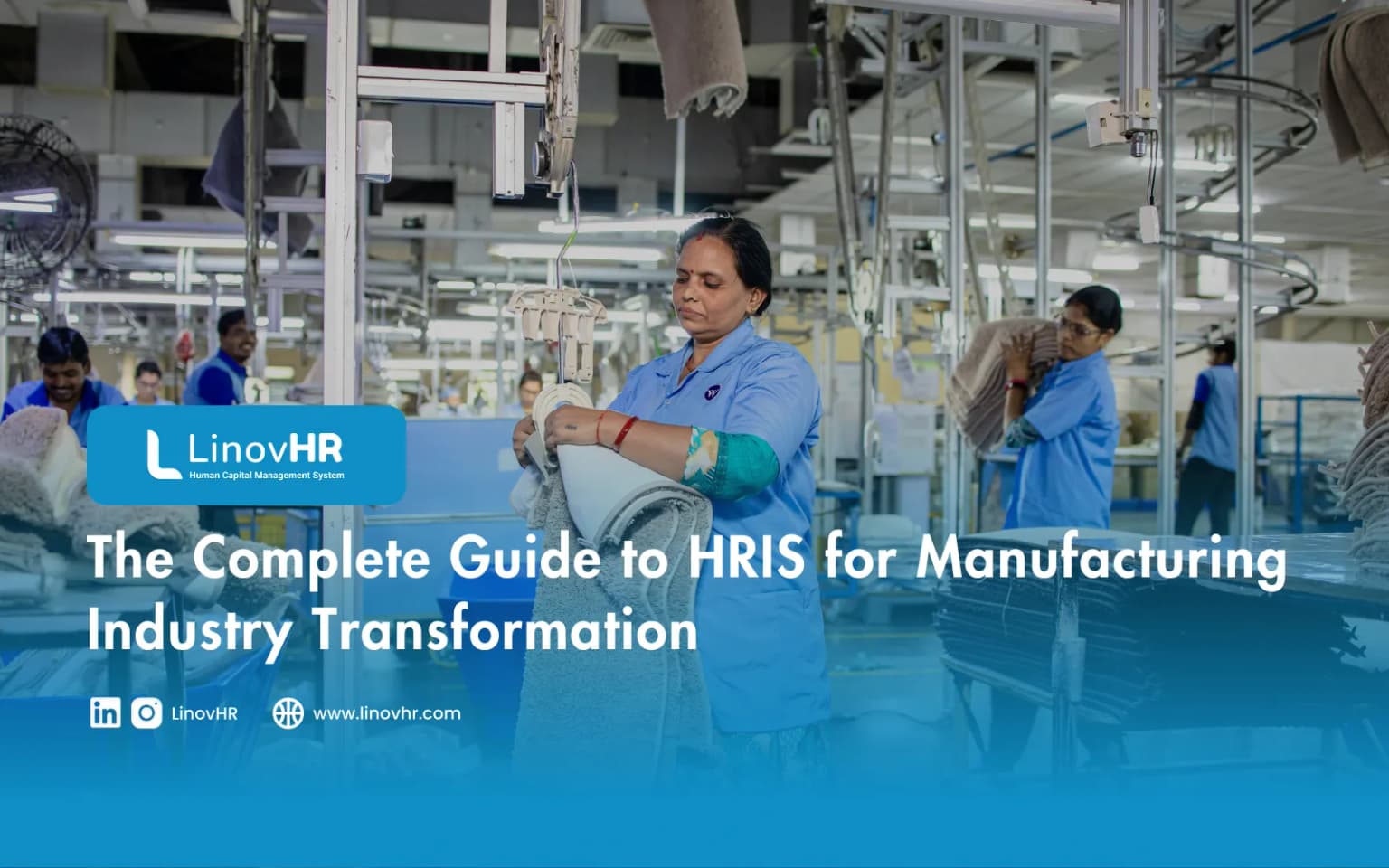
The manufacturing industry is one of the pillars of Indonesia’s economy. According to data from BPS, it contributed 19.07% to GDP in 2025. Yet keeping this sector productive is no small task. Factories run around the clock and face relentless output demands, which calls for a far more systematic approach to workforce management.
It’s a common misconception that smooth production depends only on machinery and raw materials. In reality, the people behind the production line matter just as much.
Unfortunately, many companies still rely on manual systems like spreadsheets, which are prone to errors, such as messy shift schedules, overlapping leave requests, and inaccurate overtime calculations, to name a few.
On top of that, companies often struggle with high turnover, difficulty finding skilled candidates, and managing industrial relations risks.
To address these challenges, HRIS has emerged as a strategic solution for transforming HR management. HRIS helps companies integrate attendance, shift, overtime, payroll, training, and recruitment data into a single centralized platform.
This article walks through a complete guide on how HRIS helps manufacturing companies manage their workforce more efficiently, ultimately keeping productivity on track.
Key Takeaways
-
- HRIS is a system that helps companies manage their workforce from a central platform. Manufacturing companies need this kind of system to help HR calculate pay in line with shift schedules and evaluate employee performance based on actual workload.
- The manufacturing industry’s core challenges include managing complex work shifts, skills gaps, turnover and retention, insufficient training and development, industrial relations issues, and neglected occupational health and safety (OHS) procedures.
- HRIS supports the manufacturing sector by helping HR teams manage complex shifts, record attendance for large numbers of employees, let employees handle their own administrative needs, manage a variety of employment statuses, roll out workplace safety training, and identify risks early.
What Is HRIS and Why Does the Manufacturing Industry Need It?
HRIS, or Human Resource Information System, is technology built to support HR management. This digital system helps HR teams manage employee data, attendance records, payroll processing, performance evaluations, recruitment, training, and everything else tied to workforce management.
Companies can run HRIS online to manage employee data automatically, without manual input. These systems typically also come with strong data security and store employee information in the cloud.
In the fast-paced world of manufacturing, where operations run nonstop, companies employ large numbers of workers. These workers typically rotate through shifts to keep the production line moving. Companies still relying on manual systems inevitably struggle to manage this well.
Poor management also leaves overtime data disorganized, raising the risk of errors when calculating overtime costs. That, in turn, can spark conflict between employees and management, a real threat to a company’s industrial relations.
Manufacturing is also closely tied to occupational health and safety (OHS). Unfortunately, some factories still fail to apply proper OHS procedures, which can damage a company’s reputation and erode workers’ trust.
HRIS platforms address this by giving companies a system to manage all employee data from a central location. What was once manual, scattered HR management becomes integrated, accurate, and data-driven.
Digitizing HR management matters for manufacturing companies because it helps HR teams calculate pay in line with shift schedules and stay compliant with established OHS procedures.
Through HRIS, HR teams can also evaluate employee performance based on actual workload. That keeps the entire production process running smoothly and helps companies hit their targets.
A 2025 Deloitte survey found that automation- and analytics-driven data management, paired with smart manufacturing and operations, can lift production output by 10%–20% and employee productivity by 7%–20%.
| Key Point | Summary |
| What HRIS does | HRIS helps companies manage employee data, attendance, payroll, recruitment, training, and performance evaluation from one central platform. |
| What manufacturing needs | The manufacturing industry needs a system that can manage large numbers of employees, work shifts, overtime, and K3 compliance more accurately. |
| The impact of using HRIS | HRIS helps replace manual processes with automated ones, improves data accuracy, and supports smooth factory productivity. |
HR Problems That Hold Back Productivity
In manufacturing, productivity hinges heavily on workforce stability. Issues like unfilled shifts, overlapping leave requests, inaccurate overtime calculations, skills gaps, turnover, and insufficient training can all disrupt production.
Without the right system in place, these problems keep companies stuck in reactive mode: scrambling to fill empty shifts, recalculating overtime when payroll goes wrong, or retraining employees when production quality slips.
Here are some of the most common problems in manufacturing.
1. Managing Complex Work Shifts
Shift management is one of the biggest challenges in manufacturing, since factories typically run around the clock and need firm shift schedules to keep the production line rotating.
But companies often run into trouble managing shifts manually with spreadsheets, for instance, which carries a real risk of error. The fallout: production teams have to scramble to adjust workloads on short notice, while HR ends up correcting the same data over and over.
Erratic shift management can also lead to overwork, where employees end up working beyond a healthy limit. According to OSHA and the CDC (2022), long working hours can cause fatigue, declining health, and stress, and working more than 12 hours a day raises the risk of injury by 37%.
All of this ultimately weighs on a company’s productivity, and can even cut into revenue as more employees experience declining health.
2. Skills Gaps Threaten Smooth Production
Manufacturing companies frequently struggle to recruit because candidates’ skills don’t match what the company actually needs. Some candidates have a relevant educational background but lack hands-on experience in the field.
This is what’s known as a vertical mismatch, like a gap between someone’s education and the job they end up doing, and it makes recruitment genuinely difficult for companies.
As a result, employees may not be ready to operate machinery, understand quality standards, read production data, or follow OHS procedures. Companies then have to spend extra time and money on training, mentoring, or re-recruiting.
Difficulty finding skilled workers is itself a major drag on productivity.
According to Reuters (2023), chipmaker Taiwan Semiconductor Manufacturing Company (TSMC) built a plant in Arizona, USA, but struggled to recruit local employees with the right expertise.
Because of that shortage of skilled labor, the company ended up delaying production at its Arizona plant by a year, pushing it back to 2025.
The WEF (2025) also reports that 63% of employers believe skills gaps are holding back their business transformation. And by 2030, an estimated 170 million new roles are expected to emerge, while 92 million existing roles will be displaced.
Faced with this shift, companies need to see it as an opportunity to build long-term strategies that meet the talent needs of the future.
3. Turnover and Retention: Productivity Suffers When Staff Keeps Changing
Employees who feel their career path is unclear, or who find the company culture uncomfortable, are more likely to quit. When turnover is high, manufacturing companies don’t just lose employees, it also they lose years of accumulated hands-on experience.
Every new hire needs time to learn SOPs, quality standards, workflows, and safety culture. If resignations, recruitment, onboarding, and training keep repeating in a cycle, productivity struggles to stabilize. That’s why employee retention deserves to be treated as a long-term productivity strategy, not just an HR metric.
4. Insufficient Training and Development Costs Companies Potential Talent
Some manufacturing companies face real challenges around insufficient employee training, which leads to losing promising talent and leaves employees short on the technical skills that affect day-to-day operations.
On top of that, a WEF (2025) report projects that an average of 39% of workers’ skills will change or become obsolete between 2025 and 2030. That calls for structured and measurable training tailored to operational needs. When implemented effectively, this type of training enhances employees’ skills, strengthens discipline, improves work efficiency, and increases motivation among production staff.
5. Poor Industrial Relations Breed Misunderstanding
Poor industrial relations can let HR problems snowball into full-blown production disruptions. Issues like changes to work systems, wage adjustments, overtime, layoffs, or the shift from human labor to machines can all create tension if they aren’t communicated well.
That’s why any HR transformation strategy also needs to build up HR teams’ capacity for communication, documentation, negotiation, and more transparent dispute-resolution mechanisms.
The ILO’s Social Dialogue Report (2022) explains that collective bargaining and social dialogue help build trust, stability, and labor peace, and notes that collective bargaining helps create more inclusive, effective workplace governance.
6. Occupational Health and Safety (OHS) Procedures Often Get Ignored
Manufacturing is highly exposed to workplace safety risks. Some companies neglect safety altogether, putting workers’ lives at risk.
Ignoring safety procedures can lead to workplace accidents, damage a company’s reputation, and disrupt the stability of factory operations.
According to a 2023 ILO report, 2.93 million workers die every year from work-related causes, and 395 million workers suffer non-fatal workplace injuries annually.
Meanwhile, Satu Data Indonesia recorded 462,241 workplace accident cases between January and December 2024.
This makes clear just how much is at stake when OHS procedures are ignored. Companies need to apply proper, consistent OHS procedures to create a genuinely safe working environment.
According to the Financial Times (2024), one notable case tied to neglected OHS procedures occurred at the Morowali Industrial Park (IMIP) in Indonesia, where the industrial complex recorded a total of 114 incidents resulting in 101 deaths and 240 injuries between 2015 and 2024.
Workers from the industrial complex reported that the company neglected safety and provided inadequate personal protective equipment.
In other words, OHS compliance isn’t just a box to check, but it’s part of productivity, employee experience, and smooth operations.
| Manufacturing Challenge | Summary |
| Complex work shifts | Risk of empty shifts, clashing schedules, and uneven workloads. |
| Skills gaps | Employees may not be ready to operate machinery, understand quality standards, or follow OHS procedures because of vertical mismatch. |
| High turnover | Unclear career paths and an uncomfortable company culture push employees to leave. Companies lose hands-on experience and have to repeat recruitment, onboarding, and training. |
| Lack of training | Employee skills don’t keep pace with technology and production process needs. |
| Industrial relatios issues | Poor communication between workers and management can spark conflict that disrupts operations. |
| Neglected OHS procedures | Higher risk of workplace accidents, which can undermine production stability. |
Manufacturing Productivity Isn’t Just About Smooth-Running Machines
Manufacturing has always been closely tied to machinery, automation, production capacity, and process efficiency. When factory productivity drops, companies often jump straight to blaming technical issues: underperforming machines, slow production processes, or outdated technology.
That view is not entirely wrong because machinery and technology play an important role in keeping production on track. However, manufacturing productivity is not determined solely by the sophistication of the equipment. It also depends on how well the workforce is prepared to operate machinery, oversee production, and ensure that every process meets established standards.
The importance of manufacturing productivity is also reflected in how much this sector contributes to Indonesia’s economy. According to BPS data, manufacturing contributed around 19.07% to Indonesia’s GDP as of March 2025, up 5.40% year-on-year, a bigger jump than the roughly 4.43% growth seen the year before.
In other words, when manufacturing productivity rises, the effects ripple out well beyond individual companies and boost national economic growth. But when manufacturing productivity falters, the fallout hits production efficiency, industry competitiveness, employment, and even state revenue.
That’s why manufacturing companies need to pay closer attention to overall productivity. Even the most advanced machinery won’t perform at its best without skilled operators, responsive technicians, capable supervisors, and an HR system that ensures the right workforce is available when production needs it.
In practice, many production bottlenecks actually stem from workforce issues: unfilled shifts, poorly recorded attendance, inaccurate overtime, new hires who aren’t quite skilled enough yet, or a lack of training to keep up with changing technology.
This is where HR transformation becomes essential. It shouldn’t be understood as simply digitizing HR admin work, such as attendance, payroll, employee data, and so on. It’s bigger than that. HR transformation is part of a company’s overall business development strategy.
Companies need to build a system that ensures the right people are in the right place at the right time, with the right skills, working in an environment that’s both safe and productive.
When data on shifts, attendance, overtime, competencies, training, and employee performance are all integrated, companies can make faster, better-informed decisions. As a result, HR stops being purely an administrative function and becomes a key player in maintaining operational stability and driving sustained factory productivity.
| Key Points | Summary |
| Productivity isn’t just technical | Machinery and raw materials matter, but productivity also depends on how ready the workforce is. |
| The role of HR | Operators, technicians, supervisors, and a solid HR system all determine how smoothly production runs. |
| Common problems | Empty shifts, inaccurate attendance, overtime issues, skills gaps, and insufficient training can all hold back productivity. |
| The main solution | HR transformation is needed so companies have the right people, in the right place, at the right time, with the right skills. |
From Administrative to Strategic: HR’s New Role in Manufacturing
In modern manufacturing, HR can no longer be seen purely as an administrative function handling attendance, payroll, employment contracts, or employee records. Those responsibilities still matter, but they’re no longer enough to meet the needs of an increasingly complex factory environment.
As operations run around the clock, shift schedules shift dynamically, production targets keep climbing, and specific skill sets become essential, HR needs to step into a more strategic role in maintaining company productivity.
This shift is happening because so many manufacturing productivity issues are directly tied to the quality of workforce management. Unfilled shifts, inaccurate attendance, ballooning overtime costs, high turnover, mismatched employee skills, and industrial relations conflicts can all directly affect production.
In other words, it’s no longer enough for HR to simply record data after problems occur. HR needs to be able to spot patterns, identify risks, and provide insights that help management make faster decisions.
According to BCG, HR’s role is shifting and becoming one of the most important and dynamic functions within a company. The real obstacles companies face aren’t just about technology, but also about the capability to identify the right skills and talent needed to actually put that technology to use.
This is where HR’s role as a strategic partner really matters, through people analytics and digital HR. HR can pinpoint which areas are understaffed or overburdened, then identify which positions are most vulnerable to losing employees.
HR can also help companies figure out which skills need developing so the workforce can keep pace with changes in production technology. With clear insight like this, HR becomes a genuine partner in business growth.
That’s why HR transformation should be seen as a shift in how HR contributes to the business overall. HR needs to become the hub of workforce data and insight, helping companies ensure the right people are available at the right time, with the right skills, working within a system that’s safe and productive.
| Key Points | Summary |
| HR’s changing role | HR is no longer just about admin work, but also as a strategic business partner. |
| What modern manufacturing needs | In modern manufacturing, HR needs to read patterns in attendance, overtime, turnover, skills gaps, and other workforce risks to keep factory productivity on track. |
| The role of data | People analytics and digital HR help HR deliver faster insights to management. |
| The Strategic payoff | HR’s shift toward becoming a strategic partner helps companies maintain operational stability and drive sustained productivity gains. |
Strengthening Workforce Planning as the Foundation of Factory Productivity
Workforce planning is a critical foundation in manufacturing, since every production line needs a different mix of headcount and skills. Without accurate workforce planning, companies end up spotting problems too late.
According to a WEF report, workforce stability and productivity are key factors in manufacturing’s long-term success. Companies that invest in frontline talent see a 52% improvement in stability metrics, 34% in financial metrics, and 28% in productivity and operational health & safety metrics.
Here are several types of workforce planning that manufacturing companies can apply.
1. Align Workforce Planning with Production Needs
Companies should look at production projections for the next 6–12 months, then break them down by product line, manufacturing process, and time period. That lets companies plan the workforce they’ll need to match production activity.
HR and operations teams need to know which production lines are running hot, which shift schedules will be affected, and which critical skills are in demand.
HRIS can connect production-needs data with workforce management data, such as shift schedules, attendance, leave, overtime, and staff availability. As a result, HR doesn’t just know how many employees are available; it can also see whether that number is actually enough to meet specific production needs.
2. Workforce Planning Needs to Account for Actual Working Hours
Companies need to calculate standard working hours per unit for each product. Manufacturers often skip this step, focusing only on total production volume when planning headcount. But every production line has different complexity, which means workforce needs can shift accordingly.
Companies need to know how many effective working hours are actually available. With HRIS, attendance, leave, overtime, and training-schedule data all help HR calculate workforce capacity more accurately, grounded in reality rather than guesswork.
3. Build a Skill Matrix
Having enough workers on a production line doesn’t guarantee smooth production if they don’t have the right skills. Companies need to map out critical skills, distinguish between technical skills and operational abilities, and build a skill matrix that matches employee skills to specific competencies.
A skill matrix helps companies identify the skills a team needs to get a job done, and it lets companies evaluate each employee’s performance more meaningfully.
In practice, HRIS makes it much easier for HR teams to map employee skills through features like competency management and learning management.
With a system like this, HR and operations teams can see who’s able to operate a particular machine, who can serve as backup, who still needs training, and which positions are at risk of a skills gap.
Using HRIS this way can replace old, manually managed systems like spreadsheets with a new system that can be monitored and updated on an ongoing basis.
4. Managing Overtime
Overtime can be a quick way to add capacity without hiring new employees. But relying on it constantly can drive up costs and erode both quality and workplace safety.
Overtime is also often a sign that a company is understaffed relative to its production needs.
HRIS helps companies monitor overtime patterns and make faster decisions, whether that means adding staff, restructuring shifts, or investing in cross-training.
5. Workforce Planning Needs to Be an Ongoing, Data-Driven Process
With HRIS integration, workforce planning can shift from a manual process to a data-driven one. HR can build workforce plans based on actual conditions, not just assumptions.
Headcount data comes from organization management, attendance data from the attendance module, shift data from time management, skills data from competency management, training data from the LMS, and cost data from payroll.
When needs change, HR and operations can update plans faster because employee, skills, attendance, overtime, and cost data are all already sitting in one system.
| Workforce Planning Component | Summary |
| Production needs | Workforce planning should align with production projections, production lines, shift schedules, and skill needs. |
| Actual working hours | Companies need to calculate effective working hours based on shift patterns, attendance, leave, and overtime. |
| Skill matrix | Mapping skills helps companies see who can handle specific tasks and who needs training. |
| Overtime management | Overtime needs monitoring, since it can signal understaffing or an uneven workload. |
| HRIS data | HRIS makes workforce planning more accurate by integrating employee, attendance, shift, skills, training, and payroll data. |
The Role of HRIS in Manufacturing HR Transformation
HRIS supports manufacturing HR by integrating data, such as attendance, shifts, overtime, payroll, competencies, training, and performance into a single platform. HR and operations management get a comprehensive, in-depth view of the workforce, and decisions can be made accurately, grounded in real data.
McKinsey (2025) emphasizes that increasingly integrated people data supports smarter talent decisions and sustained development, which shows just how much integrated data can drive smoother factory operations.
Here’s a closer look at the key roles HRIS plays in HR transformation within the manufacturing sector.
1. Managing Complex, Potentially Conflicting Shift Schedules
Factory operations often run nonstop, which means companies need a workforce ready to operate and oversee every stage of production. That means HR has to be able to build schedules without creating shift conflicts.
Based on issues LinovHR has seen among its clients, the sheer volume of shift schedules combined with overtime practices is one of the biggest challenges in manufacturing. Managing such complex schedules often results in work schedules that don’t match actual conditions on the ground.
That happens because production activity moves quickly, so changes in workforce needs can crop up suddenly and require real-time adjustments to shift data.
As a result, certain shifts can end up understaffed, disrupting the production process.
Overtime is another common issue, as companies frequently need extra working hours to meet sudden spikes in production targets. That’s why companies need a clear Overtime Work Order (Surat Perintah Lembur, or SPL) specifying overtime hours, so payroll calculations can be made accurately.
In some cases, companies already have their own system for managing shift schedules. But when that data isn’t integrated, HR teams still end up managing information separately, and the risk of data errors stays high.
With HRIS, HR teams can build more structured, automated shift schedules. The system also helps HR manage shift patterns, rotate schedules on a regular basis, and assign tasks to employees.
If a schedule needs to change, HRIS offers an attendance correction feature that lets employees adjust their own shift schedule, while HR can make the same kind of change by editing the timesheet.
2. Recording Attendance for Large Numbers of Employees
Manufacturing companies typically employ a large workforce. Because this sector is so closely tied to market demand, factories often ramp up production capacity to keep output high.
If HR manages attendance for the entire workforce manually, it opens the door to errors, inefficiency, dishonesty, and inaccurate working hours.
Based on clients we’ve worked with, a company like Omron typically has its own attendance hardware, such as fingerprint scanners, or gate systems that automatically register an employee as present the moment they walk through. That attendance data then flows automatically into the LinovHR system.
For a company like Krama Yudha Ratu Motor (KRM), meanwhile, attendance data still comes in raw form and is then entered into the LinovHR system.
HRIS helps HR teams automatically compile attendance data through an online attendance app integrated with methods like biometrics, facial recognition, and check-in timestamps.
With a system like this, working hours, break times, and overtime costs can all be calculated automatically, making the whole process more transparent and closer to real time.
That said, the use of fingerprint scanning, biometrics, and facial recognition needs to be handled carefully. Under Pasal 4 ayat (2) UU Nomor 27 Tahun 2022 about Pelindungan Data Pribadi, biometric data is classified as a specific category of personal data.
That article defines biometric data as data related to a person’s physical, physiological, or behavioral characteristics, such as facial images or fingerprint data.
The law also states that personal data collection must be limited and specific, legally valid, and transparent, and that once collected, data processing must protect personal data from unauthorized access, unauthorized disclosure, unauthorized alteration, misuse, destruction, and loss.
In other words, HRIS isn’t just about automatically compiling employee attendance data, but also management needs to guarantee proper protection for employees’ biometric data.
3. Letting Employees Handle Administrative Needs Independently
HRIS also helps employees manage their own administrative needs. Through the Employee Self-Service (ESS) feature, employees can request leave, permits, and overtime, check their attendance, swap shifts with coworkers, view pay slips, track their career progress, and update personal data.
Linov offers an app that lets employees handle their own attendance through the Linov Portal, a centralized attendance app that runs on a single device. In other words, one HR account can support attendance for a large number of employees.
That app is automatically integrated with Linov’s ESS and admin systems.
4. Helping Manage a Variety of Employment Statuses
In manufacturing, the workforce is often large and includes employees with different employment statuses, such as permanent, daily, seasonal, and contract workers. Managing this information manually increases the risk of errors.
With HRIS, all employee data is stored centrally, so HR teams no longer need to check everything one by one.
Stored data such as payroll, overtime, allowances, and deductions can be calculated automatically based on each employee’s specific status.
5. Implementing Workplace Safety Rules and Training
Manufacturing is highly sensitive to workplace safety issues, so companies need to enforce safety procedures to keep employees genuinely safe. Employees also need ongoing OHS training.
An HRIS’s learning management system (LMS) makes it easier for HR teams to determine which mandatory training employees need to complete, based on their role and the level of risk they face.
During onboarding, for example, new employees can be required to complete OHS training before starting work on the production line. Training formats can be tailored to company needs: video modules, digital learning materials, or seminars.
After training, employees can take a post-test to gauge their understanding of the OHS material. Companies can then use those results to see training scores, evaluate employee understanding, and decide whether further training is needed.
6. Making It Easier for Companies to Manage Assets
HRIS also helps companies manage assets, including those tied to OHS needs. For example, companies can track stock levels of safety equipment, such as helmets, safety vests, gloves, safety shoes, masks, and other protective gear.
Data stored in the asset management system can show how much stock remains, what’s already been distributed to employees, and what additional equipment might be needed.
With this data, HR teams can anticipate whether the company needs to restock, especially when hiring new employees or adding staff to a particular production line.
Through more structured asset management, OHS needs can be met more thoroughly. HR teams can also plan further ahead, making sure every employee has the right safety equipment for their role and the risks it involves.
7. HR Analytics for Spotting Productivity Risks Early
HRIS systems typically come with an HR Analytics feature that helps manufacturing companies spot productivity risks before they actually disrupt operations.
With integrated data, HR teams can track patterns in attendance, tardiness, excessive overtime, turnover, employee performance, and training needs across every production line.
For example, a spike in overtime in one division might signal that headcount isn’t sufficient. High absenteeism on a particular shift could point to workload or scheduling issues. And a drop in performance might indicate a skills gap or the need for additional training.
HR Analytics helps HR teams flag these issues to management early, so they can make decisions like adjusting shift schedules, adding staff, redistributing workload, or designing training programs.
| The Role of HRIS | Benefit for the Manufacturing Industry |
| Managing shift | Helps HR build more structured schedules and reduces the risk of conflicts. |
| Recording attendance | Makes it easier to log attendance for large numbers of employees automatically and in real time, while still respecting data privacy under UU No. 27 Tahun 2022. |
| Employee Self-Service | Employees can request leave, permits, and overtime, view pay slips, and manage admin needs independently. |
| Managing employment status | Data for permanent, contract, daily, or seasonal employees can be stored and processed more cleanly. |
| K3 training | The LMS helps companies organize safety training tailored to roles and risk levels. |
| HR analytics | Helps HR spot productivity risks early through data on attendance, overtime, turnover, performance, and training. |
Criteria for Choosing HRIS for Manufacturing
When choosing the right HRIS for a manufacturing company, make sure the system matches your factory’s operational needs. Here’s a checklist you can use as a reference when evaluating manufacturing HRIS options.
| Checklist | The Criteria of HRIS | Why It Matters |
| Can manage shift schedules | Helps HR build schedules, manage shift rotations, and reduce the risk of conflicts or understaffing. | |
| Supports overtime management | Makes it easier to record overtime and ensures overtime data connects directly to payroll calculations. | |
| Integrates with attendance | Helps companies record attendance in real time and reduces the risk of manual input errors. | |
| Connects to payroll | Ensures salary, allowance, deduction, tax, BPJS (social security), and overtime calculations are based on actual data. | |
| Supports workforce planning | Helps companies see headcount, employment status, position, work location, transfers, resignations, and manpower planning needs. | |
| Includes competency management | Helps companies map skills gaps and ensure employees have the competencies needed for their production line. | |
| Offers a Learning Management System | Supports employee training, including onboarding, OHS modules, post-tests, and learning evaluations. | |
| Supports Employee Self-Service | Makes it easy for employees to request leave, permits, and overtime, check shift schedules, view pay slips, and update their own data. | |
| Includes HR Analytics | Helps HR spot operational risks early through data on attendance, overtime, turnover, performance, and training. | |
| Flexible to company needs | Ensures the system can be tailored to the company’s needs, whether through cloud or on-premise deployment. | |
| Easy for HR and employees to use | Makes implementation go more smoothly and helps employees access admin functions easily. | |
| Has strong data security and complies with the PDP Law | Important because HRIS handles sensitive personal data, such as attendance, payroll, competencies, training, and biometrics. The system needs access controls, secure data storage, and transparent data handling. |
Stages of HRIS Implementation for Manufacturing
Implementing HRIS in a manufacturing company isn’t something to rush. Companies need to make sure the system they choose genuinely fits their operational needs, especially companies with large workforces, shift systems, complex overtime and payroll structures, and OHS training requirements.
Here are the implementation stages manufacturing companies can follow.
1. Assess HR and Operational Needs
The first stage is assessing which HR processes are currently causing bottlenecks. Companies should first identify their core problems: frequently changing shift schedules, inaccurate attendance data, incorrect overtime calculations, payroll errors, or poorly documented employee training.
This assessment helps companies prioritize HRIS implementation based on which problems have the biggest impact on factory productivity.
2. Determine the HRIS Modules Needed
Once the core problems are identified, companies can determine which HRIS modules to prioritize.
For manufacturing, the most important modules typically include Time Management, Attendance, Payroll, Workforce, Employee Self-Service, Competency Management, Learning Management System, Recruitment, Performance Management, and HR Analytics.
Module selection should be based on the most pressing needs. For example, if the core problem lies in shifts and overtime, companies can prioritize the Time Management, Attendance, and Payroll modules first.
3. Prepare and Migrate Employee Data
The next stage is preparing the data to be migrated into the HRIS. This can include employee data, employment status, job titles, work locations, shift schedules, attendance data, payroll components, leave data, overtime data, and training history.
The data migration process needs to be structured so the information entering the system is accurate and doesn’t create obstacles when it’s used for attendance, payroll, or workforce planning.
4. Integrate with Existing Systems
Many manufacturing companies already have attendance systems, fingerprint scanners, time clocks, or other internal systems in place. When implementing HRIS, these need to be integrated with existing systems so data doesn’t end up scattered.
This integration matters because it lets shift, attendance, overtime, and payroll data connect with each other. That means HR teams don’t need to keep checking things repeatedly, and the risk of data errors goes down.
5. Train HR, Supervisors, and Employees
Implementing HRIS needs to go hand in hand with getting its users ready. HR teams need to understand how to manage data, build shift schedules, process payroll, read reports, and use HR analytics.
Supervisors also need to understand how to monitor schedules, attendance, and workforce needs on each production line. Employees, meanwhile, need training on using the Employee Self-Service system: requesting leave, permits, and overtime, checking shift schedules, and accessing pay slips.
6. Roll Out Modules in Stages
To keep implementation manageable, companies can roll out HRIS in stages. For example, they can begin with attendance and payroll modules before expanding to time management, employee self-service, competency management, learning management systems, and HR analytics.
A staged rollout helps companies spot issues faster, fix processes along the way, and make sure each module works properly before expanding to the entire factory or additional branches.
7. Evaluate and Optimize HRIS Usage
Once HRIS is up and running, companies need to evaluate it regularly. This evaluation can look at whether payroll has become more accurate, shift schedules are tidier, attendance data is easier to monitor, and HR reports come together faster.
The results of this evaluation can help companies fine-tune their use of HRIS for more strategic purposes: workforce planning, skills gap analysis, succession planning, and data-driven decision-making.
| Key Ponts | Summary |
| Assess HR and operational needs | Companies need to identify core problems, such as frequently changing shift schedules, inaccurate attendance data, overtime errors, payroll issues, or undocumented training. |
| Determine the HRIS modules needed | Companies choose modules based on their needs: Time Management, Attendance, Payroll, Workforce, ESS, Competency Management, LMS, Recruitment, Performance Management, and HR Analytics. |
| Prepare and migrate employee data | Employee data, employment status, job titles, work locations, shift schedules, attendance, payroll, leave, overtime, and training history need to be moved into the HRIS in a structured way. |
| Integrate with existing systems | HRIS needs to connect with attendance systems, fingerprint scanners, time clocks, or other internal systems the company already uses. |
| Train HR, supervisors, and employees | HR teams need to understand data management, shifts, payroll, reporting, and analytics using HRIS. Supervisors need to understand workforce monitoring, while employees need training on using ESS. |
| Roll out modules in stages | Implementation can start with priority modules like attendance and payroll, then expand to time management, ESS, competency management, LMS, and HR analytics. |
| Evaluate and optimize HRIS usage | Once HRIS is running, companies need to evaluate payroll accuracy, shift schedule organization, ease of attendance monitoring, and speed of HR reporting. |
Best HRIS Software for Manufacturing Companies
Several HRIS platforms offer solutions that help manufacturing companies manage employee data, organize shift schedules, handle payroll administration, and support employee competency development.
These platforms help manufacturing operations run more smoothly by bringing complex HR management into one centralized system, making it easier for companies to monitor workforce data, identify problems, and make faster decisions.
1. LinovHR

LinovHR is HRIS software designed to help companies manage employee administration, attendance tracking, payroll calculations, and employee competency development. The system can handle complex employee data, making it a good fit for manufacturing companies with large workforces and dynamic operational needs.
In manufacturing, shift-based work systems are common to keep production running smoothly. LinovHR helps companies manage shift schedules in a more structured way, minimizing the risk of understaffed production lines.
LinovHR also helps HR teams manage employee competency data across every production line. This data provides management with the insights needed to make faster and more accurate decisions, particularly when it comes to workforce placement, skills development, and training requirements.
For attendance tracking, LinovHR offers an attendance module that automatically records employee attendance data. Employees can also check in on their own through a mobile app integrated with Employee Self-Service (ESS).
Employees can also request overtime, permits, leave, and shift swaps with coworkers. This reduces HR’s administrative burden, freeing HR up to focus more on its strategic role in supporting smooth company operations.
That attendance data also integrates with the payroll process, making salary calculations more accurate by factoring in components like overtime, shift allowances, and other pay elements tied to the factory’s operational schedule.
With centralized employee data management, HR administration becomes easier, more structured, and more efficient. Every piece of workforce data can be integrated into a single system, which helps streamline the HR team’s work.
LinovHR offers flexible deployment through both cloud and on-premise systems, which companies can choose based on their own needs and policies.
2. SAP SuccessFactors

SAP SuccessFactors is cloud-based HR management software suited to large companies, especially global enterprises with complex workforce management needs.
The software is built around the concept of Human Experience Management (HXM), an approach to HR management centered on employee experience.
SAP SuccessFactors comes with a range of modules for managing employee data, talent development, performance management, and HR analytics, and is widely used by multinational companies that need to manage skilled workforces in a more structured, data-driven way.
3. Oracle Cloud HCM

Oracle Cloud HCM is cloud-based HR management software that helps companies manage various HR processes in an integrated way, offering services for managing employee data, payroll administration, workforce planning, and HR analytics.
For manufacturing companies, Oracle Cloud HCM can be a good option because it supports HR operations across multiple regions, work locations, and organizational structures, letting companies manage a large workforce in a more structured, data-driven way.
4. BambooHR

BambooHR is cloud-based HR management software aimed at small to mid-sized companies. It simplifies HR administration through features like employee data management, new hire onboarding, and performance management.
That said, manufacturing companies with more complex needs, like shift scheduling, overtime tracking, and schedule-based payroll calculations, may need additional integrations to keep HR management running smoothly and matched to actual operational needs.
How Does LinovHR Support Manufacturing Productivity Through HR Transformation Strategy?
Manufacturing productivity depends on structured, accurate HR management, covering everything from shift schedules, attendance, and overtime to payroll, recruitment, training, and performance evaluation. When managed manually, these processes are prone to data errors, administrative delays, and less-than-optimal decisions.
LinovHR helps manufacturing companies integrate various HR processes into one centralized system. HR can monitor attendance, manage shifts, calculate overtime, run payroll, track training needs, and support data-driven decision-making.
Here’s a look at the services LinovHR offers.
1. Time Management

Time Management is one of LinovHR’s features that helps companies monitor every aspect of employees’ working time. This feature matters a lot in manufacturing, since large workforces often make scheduling genuinely difficult for companies.
With this module, companies can build regular shift schedules that match production needs, and it’s already integrated with a mobile attendance app that lets employees check their own schedules.
Nonstop factory operations also often mean companies need overtime staffing. With this service, overtime requests can be submitted easily and recorded systematically.
Integration with the payroll feature also helps companies calculate overtime more accurately, cutting down on the risk of calculation errors.
This service includes a range of features, such as:
- Working schedule
- Attendance
- Leave
- Permit
- Overtime
- Attendance allowance
- Visit
- Worksheet
2. Organization Management

LinovHR’s Organization Management helps companies build out their organizational structure and plan workforce needs more deliberately across every production line.
In manufacturing, each production line needs a different headcount, set of positions, and mix of roles, which is why companies need accurate data to make sure workforce distribution matches operational needs.
With this service, companies can map out positions, job titles, and workforce needs based on each production line.
After identifying workforce needs, companies can also more accurately estimate labor costs for each production line, which helps reduce the risk of misallocated costs and keeps HR planning more organized overall.
Features included in this service:
- Employment attribute
- Cost center
- Organization structure chart
- Position structure chart
- Manpower planning request
3. Workforce

LinovHR’s Workforce module helps manufacturing companies manage their employee database in a more centralized, structured way. Companies get a full view of their workforce: headcount, employment status, position, work location, and employee demographics.
In manufacturing, transparency around workforce data really matters, since companies need to make sure every production line has the right headcount for its operational needs.
This module also makes it easier for companies to track changes in employee data: resignations, work-location transfers, contract extensions, changes in job level, and promotions to permanent employee status. All these changes are properly documented, giving companies more accurate data to support workforce planning.
With LinovHR’s Workforce module, manufacturing companies can monitor workforce conditions more clearly and in real time. This helps HR maintain workforce availability, reduce the risk of vacant positions, and support stable, ongoing production.
Features included in this service:
- Employee database
- Employee demographic
- Employee separation
- Employee movement
- Resignation record
- Contract management
4. Competency Management

LinovHR’s Competency Management helps manufacturing companies analyze workforce skills gaps and plan employee development more precisely.
In factory operations, every position requires a different set of competencies, from operating machinery to understanding quality standards to following OHS procedures.
With this service, companies can assess each employee’s competencies and compare them against established standards, making it possible to see whether an employee’s skills already match the requirements of their position or whether further development is needed.
The results of this analysis can be used to design more targeted training programs, support career development, and prepare succession plans for key positions on the production line.
After the development process, companies can also evaluate the results of competency development, so their broader HR development strategy stays measurable and sustainable.
Features included in this service:
- Competency review & monitoring
- Competency result
- Gap analysis
- Development plan
5. Learning Management System (LMS)

LinovHR’s LMS helps manufacturing companies manage employee training in a more structured way, using a blended-learning approach. In manufacturing, OHS training is especially critical, since every production line carries a different level of risk and follows different work procedures.
With the LMS, companies can design OHS syllabi and training materials tailored to each position or production line. Machine operators, technicians, production supervisors, and warehouse workers, for instance, can each receive training content suited to their specific responsibilities and risks.
Once training is complete, companies can track employee training results more easily. There’s also a remedial feature for post-tests, which helps sharpen employees’ understanding of OHS material. Training like this supports better competency, workplace safety, and factory productivity.
6. Performance Management

LinovHR’s Performance Management helps manufacturing companies evaluate employee performance more objectively and with real data behind it. Through this service, companies can manage KPIs, assess employee performance, track progress toward targets, and calculate evaluation results automatically.
In manufacturing, performance evaluation is essential to make sure every employee is working toward production targets, quality standards, discipline, and established work procedures.
LinovHR also supports 360-degree feedback, so evaluations don’t come solely from a supervisor, but coworkers and other relevant parties can weigh in too, which makes results more comprehensive and reduces subjectivity.
The results of these performance evaluations help employees understand their strengths and areas for growth. For companies, this evaluation data can be used to design competency development programs, identify training needs, and support promotion or succession-planning decisions.
Features included in this service:
- KPI planning & actualization
- KPI monitoring & result
- Review 360
- Review monitoring & results
- Calibration process
- Balanced scorecard
7. Recruitment

LinovHR’s Recruitment Management helps manufacturing companies manage the recruitment process in a more structured way, from submitting workforce requests and approving manpower plans to posting job openings and screening candidates.
In manufacturing, this process really matters, since every division and production line needs employees with different headcounts, skills, and experience levels.
With this service, companies can manage job openings based on position needs, the reason for hiring, candidate criteria, and required headcount. HR teams can also assess candidates based on qualifications, skills, work experience, and fit with operational needs.
LinovHR also makes it easier to post job openings through a job portal and manage candidate data centrally. The applicant pool feature can be used to filter candidates against set criteria, speeding up and sharpening the shortlisting process.
From there, companies can manage each stage of candidate selection through the selection process feature, such as screening, interviews, and further assessment. LinovHR also supports schedule monitoring, helping HR organize interview schedules with candidates more smoothly.
With an integrated recruitment process, manufacturing companies can meet their workforce needs faster, more accurately, and in line with production requirements.
Features included in this service:
- General setting
- Selection process configuration
- Question bank
- Recruitment request
- Job vacancy
- Job portal
- Candidate
- Applicant pool
- Selection process
- Schedule monitoring
8. Payroll

LinovHR’s Payroll helps manufacturing companies manage employee payroll automatically, accurately, and in an integrated way. Every salary calculation is based on established components: base salary, allowances, deductions, income tax (PPh 21), BPJS social security contributions, and overtime.
In manufacturing, overtime is common because factory operations run on shift systems with high production demands. If overtime is still calculated manually, companies risk calculation errors that can lead to incorrect salary payments.
With LinovHR’s Payroll, data such as shift schedules, attendance, overtime, leave, and permits can all be integrated into a single system. This integration helps companies calculate salaries based on actual data, making payroll more efficient, transparent, and less prone to error.
Payroll also comes with supporting features like salary component calculation, PPh 21 tax calculation, BPJS Ketenagakerjaan and BPJS Kesehatan calculations, overtime management, and pay slip generation.
With these features, manufacturing companies can manage payroll for permanent, contract, daily, and shift-based employees in a way that’s more organized and better matched to operational needs.
9. Employee Self-Service (ESS)

LinovHR’s Employee Self-Service (ESS) lets employees manage their own administrative needs through the system. With this service, employees can view personal data, request leave or permits, check in for attendance, access work schedules, view pay slips, and update certain data, all without going through a manual HR process.
For manufacturing companies running shift-based work systems, ESS is especially useful, since employees can check their work schedule on their own, right from their phone. This makes it easy for factory workers to know their shift schedule, working hours, and attendance information without waiting for direct confirmation from HR or a supervisor.
Linov also has an app called Linov Portal, which lets employees check in independently. It’s a centralized attendance app that runs on a single device, meaning one HR account can support attendance for a large number of employees.
That app is automatically integrated with Linov’s ESS and admin systems.
Employees can also use the employee calendar to keep track of their shift schedules more easily. This feature allows them to swap shifts with coworkers and submit attendance corrections with ease, making employee administration more efficient while helping factory operations run more smoothly overall.
Features included in this service:
- Employee administration access
- Timesheet & attendance
- Leave, permit, and sick-leave requests
- Reimbursement claims
- Recruitment requests
- Training
Conclusion
HR transformation is a critical part of maintaining productivity in the manufacturing industry. Factory productivity is not determined solely by machinery, raw materials, or production capacity. It also depends on how well the workforce is prepared to operate, oversee, and support every stage of the production process.
Various HR management challenges, including complex shift schedules, excessive overtime, and skills gaps, highlight the need for an integrated system that centralizes workforce data in one place. With a unified view of employee information, companies can make faster decisions, improve operational efficiency, and support more effective workforce management.
With HRIS, manufacturing companies can manage all their employee, shift, attendance, overtime, payroll, recruitment, competency, training, and performance-management data from a single centralized system.
LinovHR offers an HRIS solution that turns HR from a purely administrative function into a strategic partner in maintaining operational stability and factory productivity.
Through modules like Time Management, Workforce, Payroll, Competency Management, LMS, Recruitment, Performance Management, and Employee Self-Service, companies can manage their HR needs more efficiently and support smoother factory productivity.
Start transforming your manufacturing company’s HR system with LinovHR. Request a free demo and discover a more efficient, integrated way to manage shifts, attendance, overtime, payroll, and employee development.
Frequently Asked Questions (FAQ)
1. What’s the connection between HR management and factory productivity?
HR management plays a critical role in making sure the workforce is available to match production needs. If shift scheduling, attendance, overtime, skills, and training aren’t managed well, factory productivity can suffer even when machinery and raw materials are readily available.
2. Why does HR transformation matter for the manufacturing industry?
HR transformation matters because manufacturing involves complex operations, large workforces, shift systems, and constantly evolving skill requirements. With HR transformation, companies can manage their workforce in a more structured, accurate, data-driven way.
3. What are the signs that a manual HR system is no longer working?
A manual HR system starts to break down when employee data is hard to keep updated, shift schedules keep clashing, attendance is inaccurate, overtime calculations are frequently wrong, payroll runs late, and HR takes too long to produce reports or make decisions.
4. Can HRIS help manage different types of employment status?
Yes. HRIS helps companies manage various employment statuses, including permanent, contract, daily, seasonal, and indefinite-term employees under PKWTT. All employee data is stored in a centralized system, making it easier to manage payroll, support workforce planning, and streamline employee administration.
5. How do you choose the right HRIS for a manufacturing company?
Choose an HRIS that can handle manufacturing’s core needs: shift scheduling, attendance, overtime, payroll, multiple employment statuses, OHS training, competency management, recruitment, and HR analytics. Also, make sure the system is well-integrated, easy to use, and adaptable to your company’s operational needs.