In today’s data-driven business landscape, HR departments play a far more strategic role than ever before. Gone are the days when HR was seen merely as an administrative function.
Today’s HR professionals are expected to make informed decisions that directly impact productivity, employee engagement, and organizational success.
That’s where HR Analytics Tools come in. These tools empower HR teams to collect, interpret, and leverage workforce data to identify trends, predict outcomes, and improve overall decision-making.
By turning raw data into actionable insights, HR professionals can shape better hiring practices, improve retention strategies, and ensure alignment between business goals and workforce performance.
As we move deeper into 2025, companies that embrace HR analytics will have a significant competitive edge. From measuring employee engagement to forecasting turnover, HR analytics tools enable businesses to make proactive, evidence-based decisions rather than relying on intuition or outdated reports.
In this article, we’ll explore what HR analytics tools are, the key features you should look for, and the top 10 HR Analytics tools that are helping HR professionals around the world make smarter, data-backed decisions.
What Are HR Analytics Tools?
Human Resources (HR) Analytics Tools are software solutions designed to collect, process, and analyze workforce-related data to improve HR decision-making. These tools provide valuable insights into various HR areas, including recruitment, performance management, employee engagement, and retention.
By integrating data from multiple sources, they enable organizations to understand their people better and make informed decisions that drive productivity and growth.
In modern organizations, HR analytics plays a crucial role in shaping strategic business outcomes. Rather than relying on assumptions, HR teams can use analytics tools to uncover patterns and correlations that might otherwise go unnoticed, such as identifying departments with high turnover or pinpointing which training programs yield the greatest ROI.
The importance of HR analytics lies in its ability to transform HR from a support function into a business partner.
Through predictive analytics and real-time dashboards, HR professionals can forecast workforce needs, anticipate challenges, and make data-backed recommendations that align with organizational goals.
For modern companies, investing in HR analytics tools is no longer optional, it’s a necessity. With competition for talent intensifying and business environments changing rapidly, organizations that leverage analytics will not only attract and retain top talent more effectively but also build a data-driven culture that fosters sustainable success.
Also Read: HR Analytics: Definition, Benefits, and How It Relates to HR Data Analytics?
Key Features to Look for in HR Analytics Software
Before selecting the right HR Analytics Tool, it’s important to understand the essential features that can truly make a difference in your organization.
Not all tools are created equal, the best ones combine advanced data capabilities, intuitive usability, and actionable insights that empower HR leaders to make better decisions.
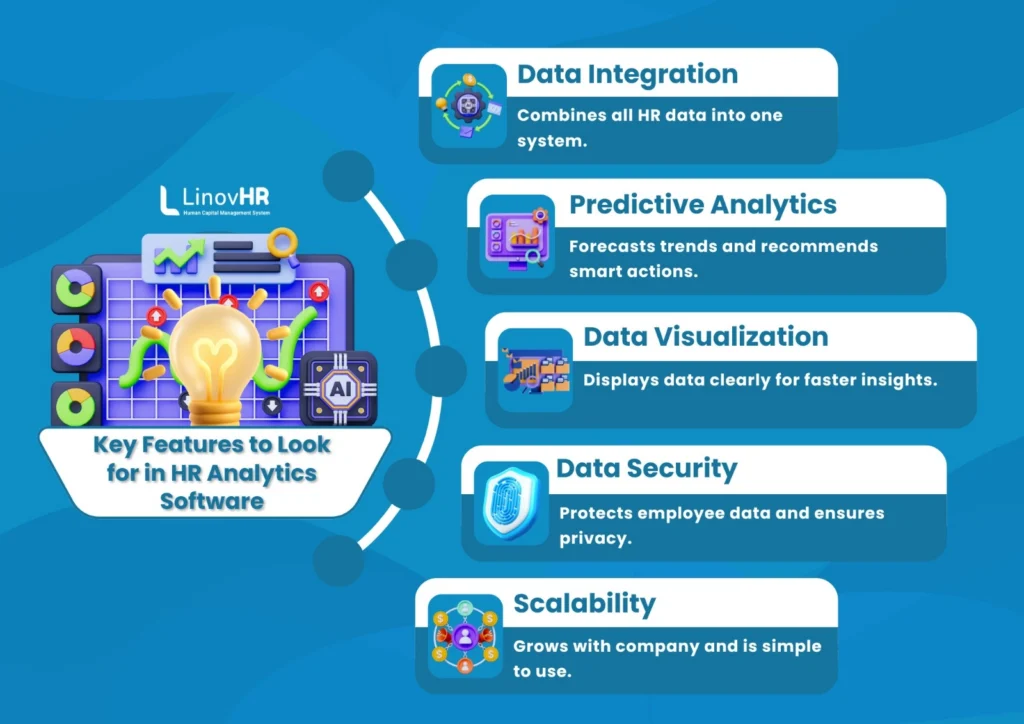
Below are key features every HR professional should consider when evaluating HR analytics software:
1. Comprehensive Data Integration
A powerful HR analytics platform should be capable of integrating data from multiple HR systems, such as recruitment, payroll, performance management, and employee engagement platforms.
This unified approach ensures that HR professionals have a 360-degree view of their workforce, eliminating data silos and inconsistencies. With all employee data centralized in one place, organizations can track performance trends, analyze turnover causes, and identify improvement areas more effectively.
Moreover, seamless data integration allows companies to connect HR insights with business outcomes, linking workforce behavior to productivity, profitability, and overall performance. This level of visibility is critical for aligning HR strategies with company goals.
2. Predictive and Prescriptive Analytics
Modern HR analytics tools go beyond reporting historical data, they use predictive analytics to forecast future workforce trends.
For instance, they can predict which employees are most likely to leave, which candidates will perform best, or what factors drive engagement.Prescriptive analytics take this a step further by recommending specific actions HR can take to address potential challenges before they occur.
By leveraging machine learning and statistical models, HR leaders can make proactive, evidence-based decisions rather than reactive ones. This capability not only saves time but also enhances overall workforce planning and risk management.
3. Intuitive Dashboards and Data Visualization
Data is only valuable when it’s easy to interpret. A good HR analytics tool should offer customizable dashboards and visual reports that present data in a clear, user-friendly way.
Through charts, graphs, and heatmaps, HR teams can quickly identify patterns and make data-driven decisions without needing deep technical expertise.
Data visualization also improves collaboration between HR and other departments. When an HR leader can clearly communicate workforce insights to executive and team managers, it strengthens alignment and supports strategic business decisions.
4. Compliance and Data Security
Because HR data includes sensitive employee information, maintaining compliance and data security is non-negotiable. The best HR analytics tools adhere to data privacy standards such as GDPR or local labor laws, ensuring that all employee data is protected from unauthorized access.
These platforms typically include encryption, role-based access control, and audit trails to safeguard information integrity. Ensuring compliance not only builds employee trust but also protects organizations from legal and financial penalties.
5. Scalability and Ease of Use
As your organization grows, your HR analytics solution should grow with you. Scalability ensures that the software can handle increasing data volume, users, and complexity without compromising performance.
Additionally, the system should be intuitive enough for HR professionals without a deep analytics background to use comfortably.
Ease of use is crucial for adoption, if the tools are too complex, HR teams may underutilize its potential. A clean interface, guided analytics, and accessible support resources can make a significant difference in ensuring smooth daily use and long-term value.
The right HR analytics software should balance power and simplicity, offering robust analytical features without overwhelming users. Ultimately, the best tools are those that help HR professionals turn data into strategy, insights into action, and analytics into measurable business impact.
Top 10 HR Analytics Tools in 2025
Here are ten top HR analytics software platforms that HR professionals should know in 2025. Each offers different strengths in data integration, visualisation, predictive analytics and HR-insight capabilities.
1. LinovHR
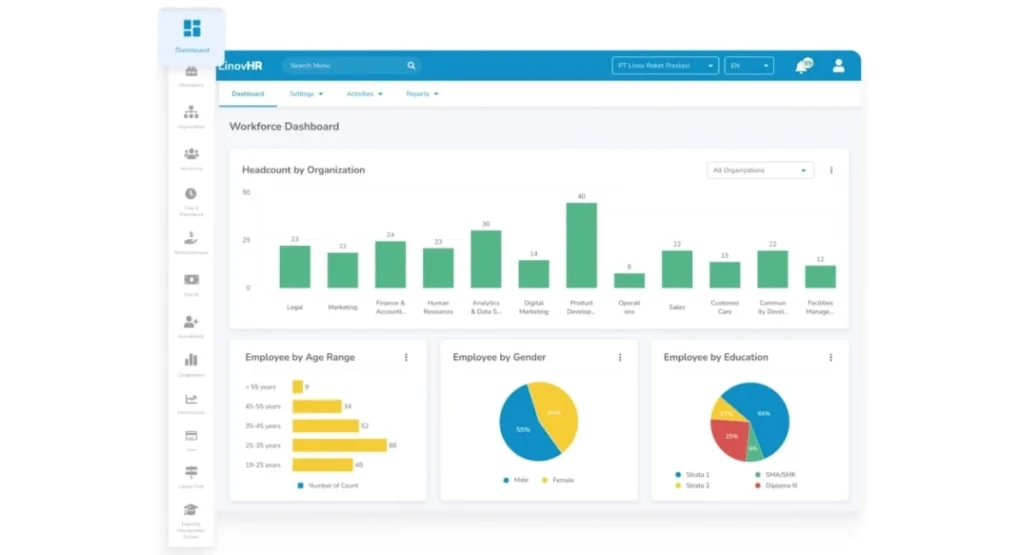
LinovHR is an Indonesian-based HRIS platform designed to simplify and automate every aspect of human resources management, from recruitment and performance appraisal to payroll and analytics.
The system provides an integrated database that connects various HR modules, making it easier for HR professionals to track employee information, generate reports, and make data-driven decisions.
LinovHR’s ecosystem allows HR teams to centralize their workflow in one digital platform instead of managing scattered systems or manual spreadsheets.
What sets LinovHR apart is its Recruitment module, which leverages AI to streamline the entire hiring process. The system helps HR teams automatically screen resumes, match candidates to job descriptions, and schedule interviews efficiently.
This automation reduces manual workloads and shortens the hiring cycle, enabling HR to focus on talent strategy and candidates experience rather than administrative tasks.
Beyond recruitment, LinovHR also provides modules for performance management, attendance tracking, and payroll processing, all interconnected within one platform. The HR analytics feature helps businesses visualize workforce data through customizable dashboards and reports, supporting strategic HR planning.
LinovHR is especially beneficial for companies in Indonesia and Southeast Asia looking for a localized, cloud-based HR solution that meets local compliance while still offering modern analytics capabilities.
| Pros | Cons |
| Fully integrated HR modules (recruitment, performance, payroll, attendance) | Some analytics features may be optimized for existing LinovHR users |
| AI-powered recruitment system for faster candidate screening | Implementation may require initial setup and employee training |
| Real-time dashboards and analytics for HR insights | |
| Local compliance support for Indonesian labour laws | |
| Strong customer support and local expertise |
2. Visier
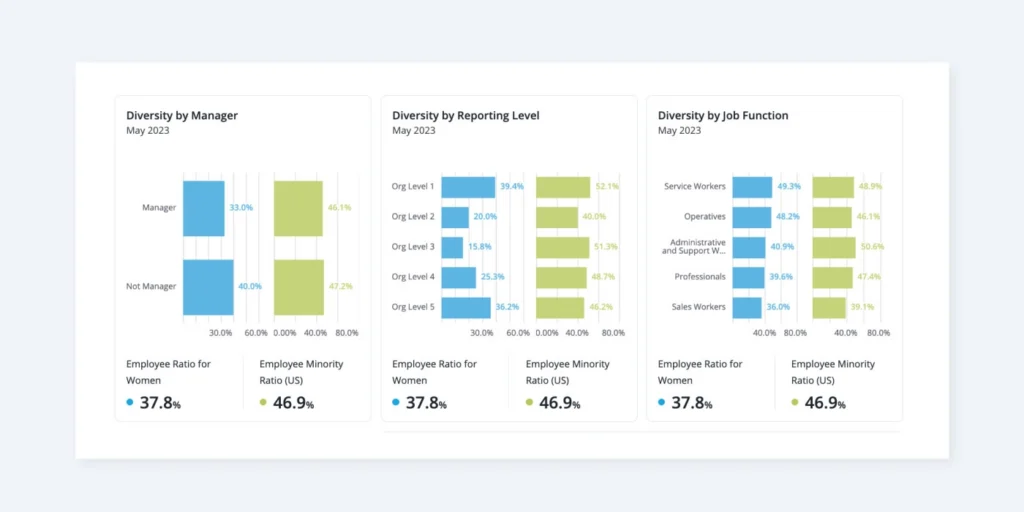
Visier is one of most recognized global leaders in people analytics and workforce planning. It provides organizations with a powerful platform to connect HR and business data from multiple systems, creating a single source of truth for workforce insights.
Visier enables HR leaders to move from reactive reporting to proactive strategy, using advanced analytics to understand turnover trends. Workforce performance, and talent risks.
The platform’s biggest lies in its predictive analytics engine, which allows businesses to forecast workforce changes, identify potential attrition, and evaluate the effectiveness of HR programs. Through its AI assistant, Vee, Visier simplifies complex data interpretation, enabling HR managers and executives to gain actionable insights without requiring deep analytical skills.
The platform integrates seamlessly with most HRIS, ATS, and payroll systems, making it ideal for organizations that rely on multiple tools.
In addition to analytics, Visier provides visual dashboards and pre-built templates tailored for HR metrics such as diversity, engagement, performance, and headcount planning.
Its enterprise-grade security, scalability, and robust data governance make it a trusted choice for large business outcomes, supporting smarter decision-making across departments and improving organizational agility.
| Pros | Cons |
| Comprehensive data integration from multiple HR systems | Expensive compared to smaller-scale HR analytics tools |
| Predictive insights through AI-driven analytics | Requires skilled analytics for full utilization |
| Ready-made dashboards and visual templates | Complex setup for first-time users. |
3. Crunchr
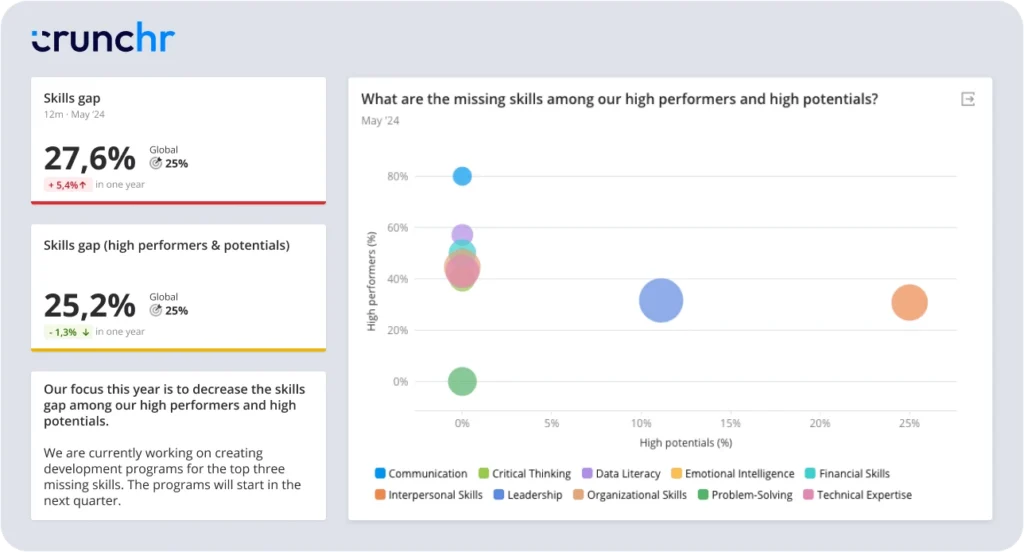
Crunchr is a powerful HR analytics and workforce reporting platform designed to help companies transform raw employee data into meaningful insights.
It provides an easy-to-use interface where HR teams can visualize key workforce trends such as turnover rates, diversity metrics, and performance outcomes. The platform emphasizes simplicity, making analytics accessible even for HR professionals without deep technical expertise.
One of Crunchr’s biggest strengths lies in its pre-built dashboards and self-service analytics tools, which allow users to create custom reports in just a few clicks. HR teams can analyze real-time data from different systems, like HRIS, ATS, and payroll, and turn them into strategic insights that support evidence-based decision-making.
With a focus on data accuracy and usability, Crunchr ensures that insights are not only comprehensive but also easy to interpret and act upon.
Additionally, Crunchr provides collaboration features that make it easy for HR and business leaders share insights across departments. From talent retention to workforce planning, Crunchr gives organizations a holistic view of their people.
The platform is ideal for companies that want to bridge the gap between HR reporting and business strategy without investing in complex IT infrastructure.
| Pros | Cons |
| User-friendly dashboard with pre-built templates | Limited predictive analytics compared to larger platforms |
| Real-time data visualization for better decision-making | Pricing may be high for small businesses |
| Seamless integration with existing HR systems | Requires accurate data input for optimal results |
4. ChartHop
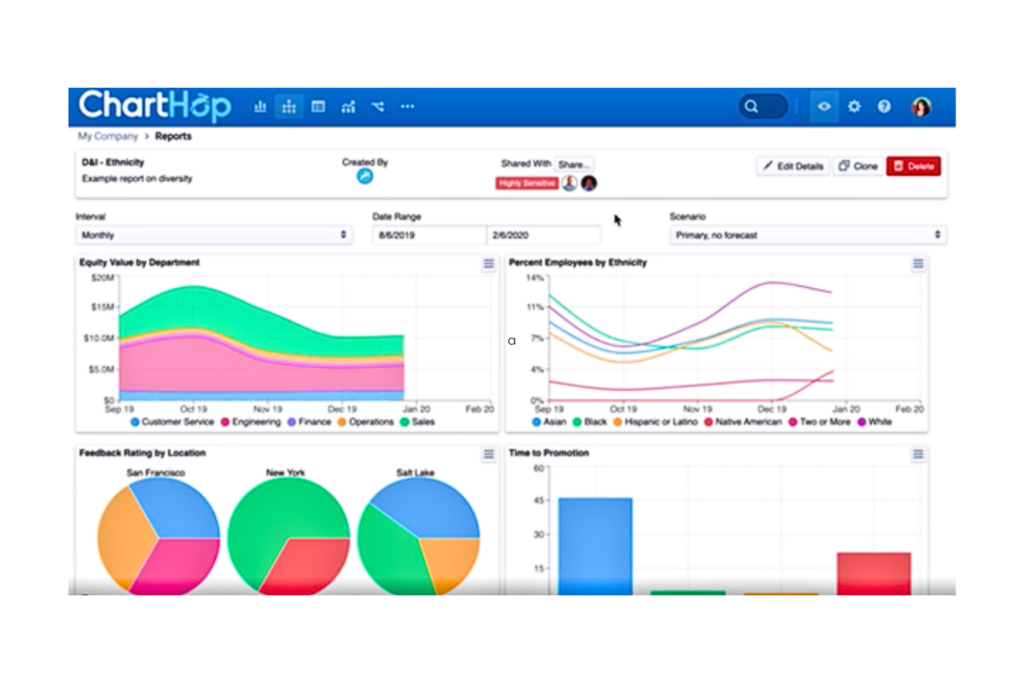
ChartHop is an innovative people analytics and org management platform designed to give HR leaders and executives a visual understanding of their workforce.
Unlike traditional analytics tools, ChartHop integrates HR data with org chart, compensation, and headcount planning, offering a dynamic and visual approach to HR decision-making.
Its key feature is the interactive organizational chart, which allows companies to view real-time updates of team structures, roles, and reporting lines.
This feature helps HR and business leaders identify gaps, forecast hiring needs, and plan workforce changes more efficiently. ChartHop also enables performance tracking, DEI (Diversity, Equity, Inclusion) analytics, and budget planning within one integrated platform.
With its modern design and easy implementation, ChartHop is ideal for growing organizations that want transparency and agility in HR management.
The platform empowers leaders with a clear overview of people data while ensuring that every HR decision, from hiring to promotion, is based on data, not assumptions.
| Pros | Cons |
| Highly visual and interactive org chart system | Limited advanced analytics for large enterprises |
| Strong integration with HRIS and payroll tools | Can be overwhelming for new users due to many features |
| Useful for workforce planning and DEI tracking | Some integrations require premium plans |
5. Teramind
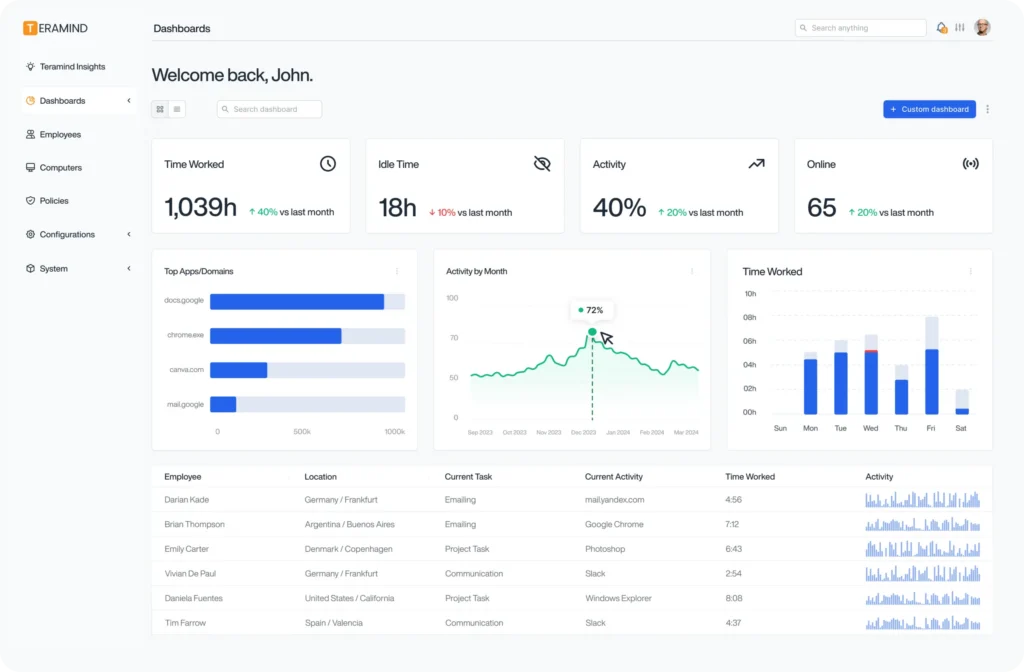
Teramind is a leading workforce analytics and employee monitoring platform that provides deep insights into employee behavior, productivity, and compliance.
By capturing and analyzing user activity data, Teramind helps HR departments and managers identify trends in employee engagement, workflow efficiency, and potential risks.
This tool goes beyond traditional HR analytics by focusing on behavior-based insights, giving organizations the ability to understand not just what employees do, but how and why they do it.
One of Teramind’s strengths lies in its ability to combine user activity monitoring with intelligent behavior analytics. HR leaders can use this data to optimize workforce performance, identify top performers, and detect early signs of burnout or disengagement.
The tool’s advanced analytics dashboard transforms massive data sets into visual insights, making it easier to track productivity across teams or departments. Teramind also helps organizations maintain compliance with internal policies and data protection regulations.
Teramind integrates with a variety of existing HR and IT systems, enabling seamless data flow for reporting and strategic decision-making.
Its real-time alert system also allows HR and security teams to respond quickly to anomalies or risky activities. Overall, Teramind is an ideal choice for businesses looking to leverage data analytics for both productivity optimization and employee compliance monitoring.
| Pros | Cons |
| Provides detailed behavioral analytics and productivity insights | Can be perceived as overly invasive if not managed transparently |
| Real-time alerts and monitoring features for proactive management | Requires strong data governance and privacy policies |
| Helps identify compliance risks insider threats | Pricing may be high for small businesses |
6. SAP Analytics Cloud
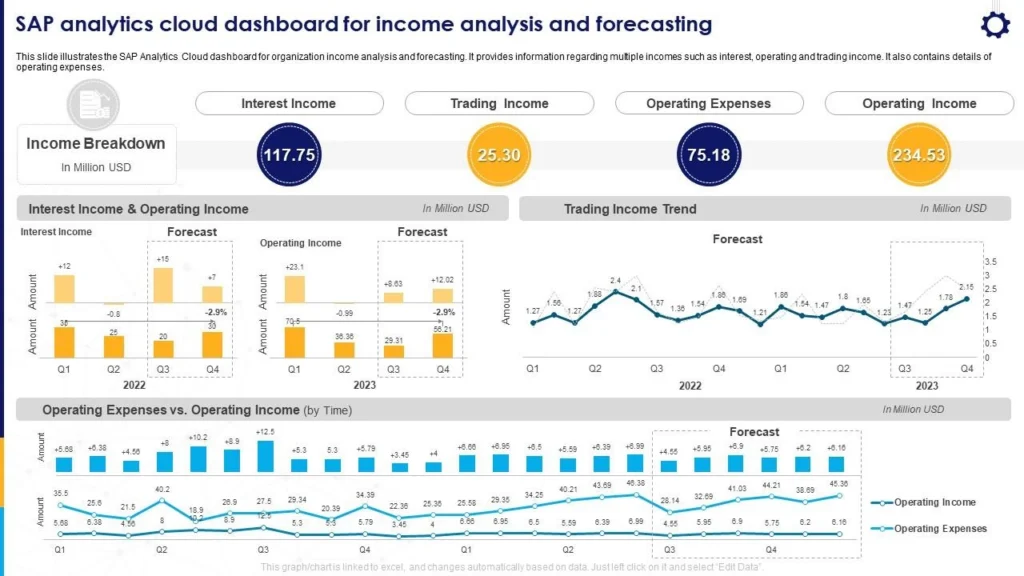
SAP Analytics Cloud (SAC) is a comprehensive business intelligence and analytics platform that integrates HR data with enterprise-wide insights, enabling data-driven decisions across the entire organization.
Designed by SAP, this solution combines planning, predictive analytics, and visualization in one cloud-based environment. For HR professionals, it helps transform raw workforce data into actionable insights, allowing leaders to monitor employee performance, diversity, engagement, and turnover trends in real time.
One of SAP Analytics Cloud’s standout capabilities is its predictive analytics and machine learning engine, which helps HR departments anticipate talent needs, forecast workforce capacity, and identify potential retention risks.
This predictive approach empowers HR leaders to create strategic plans backed by data rather than intuition. SAC also offers smart discovery features that automatically detect patterns and correlations within HR datasets, helping teams uncover insights they might otherwise overlook.
Additionally, the platform offers seamless integration with SAP SuccessFactors and other HRIS systems, ensuring real-time synchronization of employee and business data.
The clean, interactive dashboards make it easier to communicate insights with stakeholders and executives, promoting alignment between HR and business goals.
Overall, SAP Analytics Cloud delivers an enterprise-grade solution for organizations seeking to unify HR analytics with broader strategic planning.
| Pros | Cons |
| Advanced predictive analytics and machine learning features | Complex setup and configuration for new users |
| Deep integration with SAP SuccessFactors and other SAP product | High cost compared to smaller HR analytics tools |
| Unified platforms for HR, finance, and business data analysis | May require dedicated IT or data specialists for optimal use |
7. Tableau
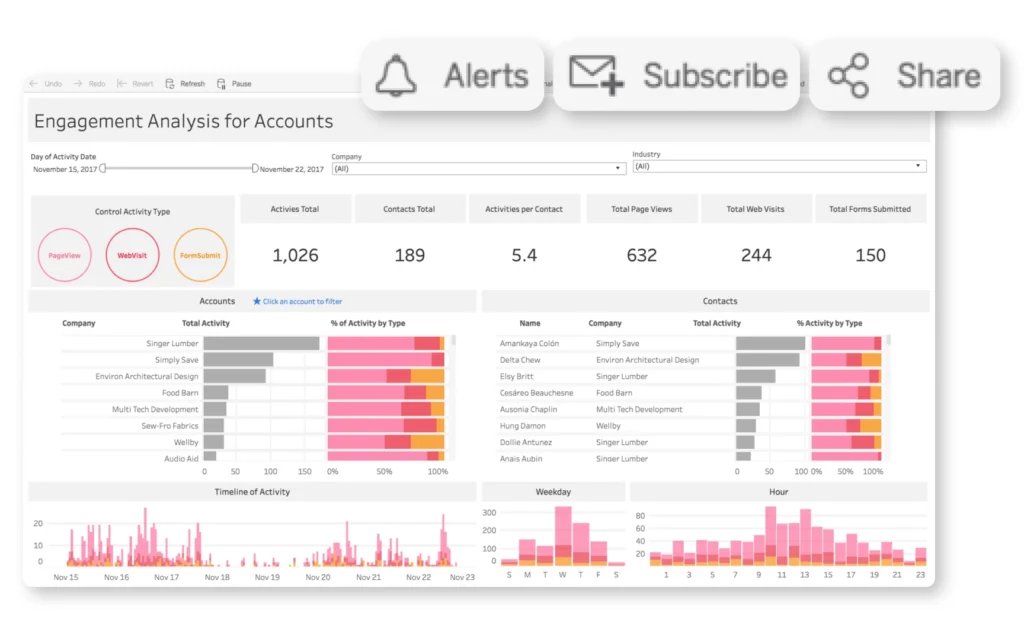
Tableau is one of the most popular data visualization tools used across industries, including HR analytics. It enables HR teams to transform complex data sets into interactive dashboards that provide deep insights into employee engagement, turnover, and recruitment effectiveness.
Unlike most HR specific platforms, Tableau offers flexibility. HR departments can build custom dashboards and analytics models based on their own data sources, such as Excel, HRIS, or ATS systems. This makes it ideal for companies that want complete control over their HR analytics strategy.
Additionally, Tableau’s drag-and-drop interface allows HR professionals to visualize data trends without coding. Organizations that use Tableau often integrate it with their HR systems to track KPIs, measure DEI goals, and analyze performance metrics efficiently.
| Pros | Cons |
| Highly flexible and customizable analytics tool | Requires setup and data modeling expertise initially |
| Intuitive drag-and-drop interface for non-technical users | Not an HR-dedicated platform, may need custom configuration |
| Compatible with various HR and business data sources | Licensing costs can be expertise for small teams |
8. Sisense
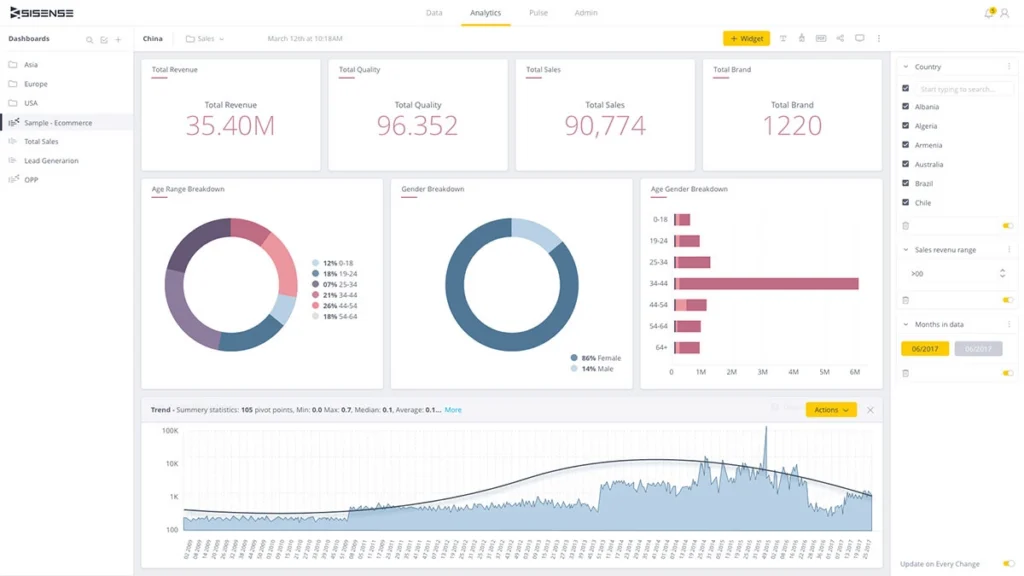
Sisense is an AI-driven analytics and business intelligence platform that empowers HR teams to analyze and visualize employee data effectively. It helps organizations uncover patterns in workforce performance, engagement, and turnover using advanced machine learning and predictive analytics.
The platform integrates seamlessly with major HR systems, enabling real-time analytics without complex setup. Sisense’s embedded analytics capabilities allow HR teams to bring dashboards directly into existing HR applications or employee portals, making insights instantly accessible across the organization.
What makes Sisense stand out is its scalability and customization. Whether a company wants to analyze recruitment efficiency, performance ratings, or DEI metrics, Sisense provides the flexibility to adapt to diverse HR needs.
| Pros | Cons |
| Advanced AI and machine learning capabilities | Requires technical expertise for complex analytics models |
| Supports embedded analytics for easier accessibility | Setup can take time for full HR data integration |
| Highly scalable and customizable for growing organizations | Premium pricing may not fit all budgets |
9. OneModel
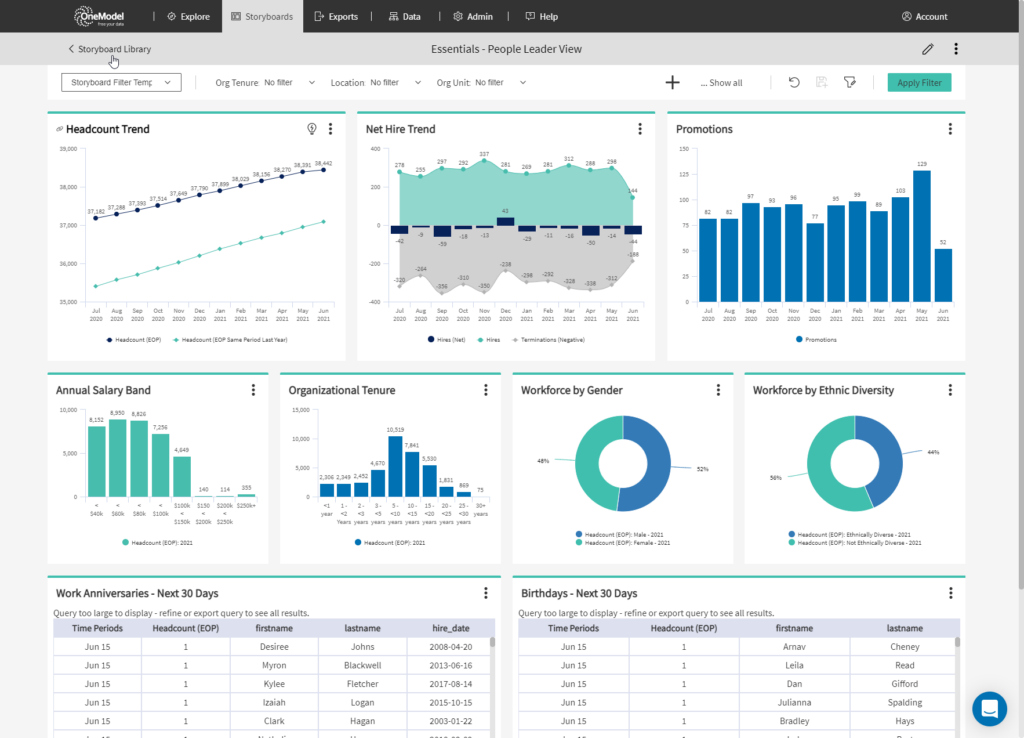
OneModel is an advanced HR analytics platform designed to give organizations full control over their workforce data. Unlike many HR analytics tools that offer limited insights within predefined dashboards.
OneModel focuses on data unification, allowing companies to consolidate data from multiple HR systems, such as payroll, recruitment, performance, and engagement, into one centralized analytics environment, data-driven insight that supports strategic workforce planning and decision-making.
Another standout feature of OneModel is its AI-powered predictive analytics. By leveraging machine learning models, it helps organizations forecast future workforce trends such as employee turnover, hiring needs, and performance risks.
This forward-looking capability allows HR leaders to take proactive actions instead of reacting to issues after they occur. The tool also ensures transparency by allowing users to understand how predictions are generated, promoting trust in data-based decisions.
In addition, OneModel offers customizable dashboards and data governance tools to maintain security and compliance across HR operations.
Its open data architecture supports integration with BI tools like Tableau or Power BI, giving HR analysts the flexibility to visualize and interpret workforce data in their preferred way.
Overall, OneModel stands out as a powerful HR analytics solution for enterprises looking to connect all HR data sources and build smarter, predictive talent strategies.
| Pros | Cons |
| Advanced predictive analytics for workforce trends and turnover forecasting | Complex setup process requiring technical expertise |
| Full data unification across HR systems for holistic insights | Premium pricing for enterprise-level customization |
| Strong integration capabilities with BI tools like Tableau and Power BI | May be overpowered for small or mid-sized HR teams |
10. Nakisa
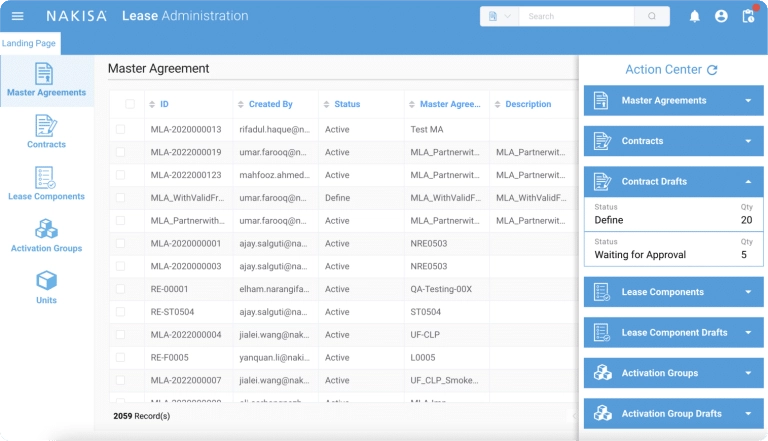
Nakisa is a global HR and organizational design platform that helps enterprises align people, structure, and strategy through real-time analytics and visualization.
It provides HR professionals with a powerful way to map organizational hierarchies, track workforce movements, and understand the impact of structural changes on performance and costs.
Nakisa’s OrgDesign module allows businesses to model different scenarios, such as mergers, restructures, or leadership transitions, helping leaders make confident, data-backed decisions.
Beyond visualization, Nakisa incorporates AI-driven workforce analytics that reveal insights into employee demographics, succession readiness, and skill gaps. Its predictive analytics can identify at-risk positions and recommend succession planning strategies to ensure business continuity.
The system also integrates seamlessly with popular HRIS platforms such as SAP SuccessFactors and Workday, providing real-time data synchronization and accuracy.
Nakisa’s intuitive drag-and-drop interface makes it easy for HR teams to create visual organizational maps and run dynamic “what-if” simulations. This level of flexibility allows companies to plan future workforce structures efficiently, ensuring that HR strategies align with financial and operational goals.
As a result, Nakisa serves as a strategic bridge between HR and leadership teams, enabling organizations to visualize, analyze, and optimize their workforce like never before.
| Pros | Cons |
| Powerful org design and workforce planning features | Can be expensive for smaller companies |
| Seamless integration with SAP, Workday, and other HR systems | Requires initial training for advanced modeling tools |
| Real-time visualization and predictive analytics capabilities | Limited mobile functionality compared to web version |
Empower Data-Driven HR Decisions with LinovHR HR Analytics
In today’s competitive business landscape, HR leaders can no longer rely on intuition alone. Making data-driven decisions is the key to improving employee performance, retention, and overall organizational success.
That’s where LinovHR Analytics comes in an all-in-one solution that transforms HR data into meaningful insights.
LinovHR’s analytics tools provide real-time visibility into your workforce, helping you identify trends, measure engagement, and make proactive decisions.
Whether it’s optimizing recruitment strategies, monitoring productivity, or predicting turnover risks, LinovHR equips HR professionals with the intelligence they need to stay ahead.
Designed for modern organizations, LinovHR ensures that your HR operations are not only efficient but also strategic.
With its user-friendly interface and localized compliance for the Indonesian market, LinovHR helps companies align HR strategies with long-term business goals empowering HR to become a true strategic partner.
Enhance your HR decision-making with LinovHR Analytics. Request a free demo today!